
How to work with Essential Oils
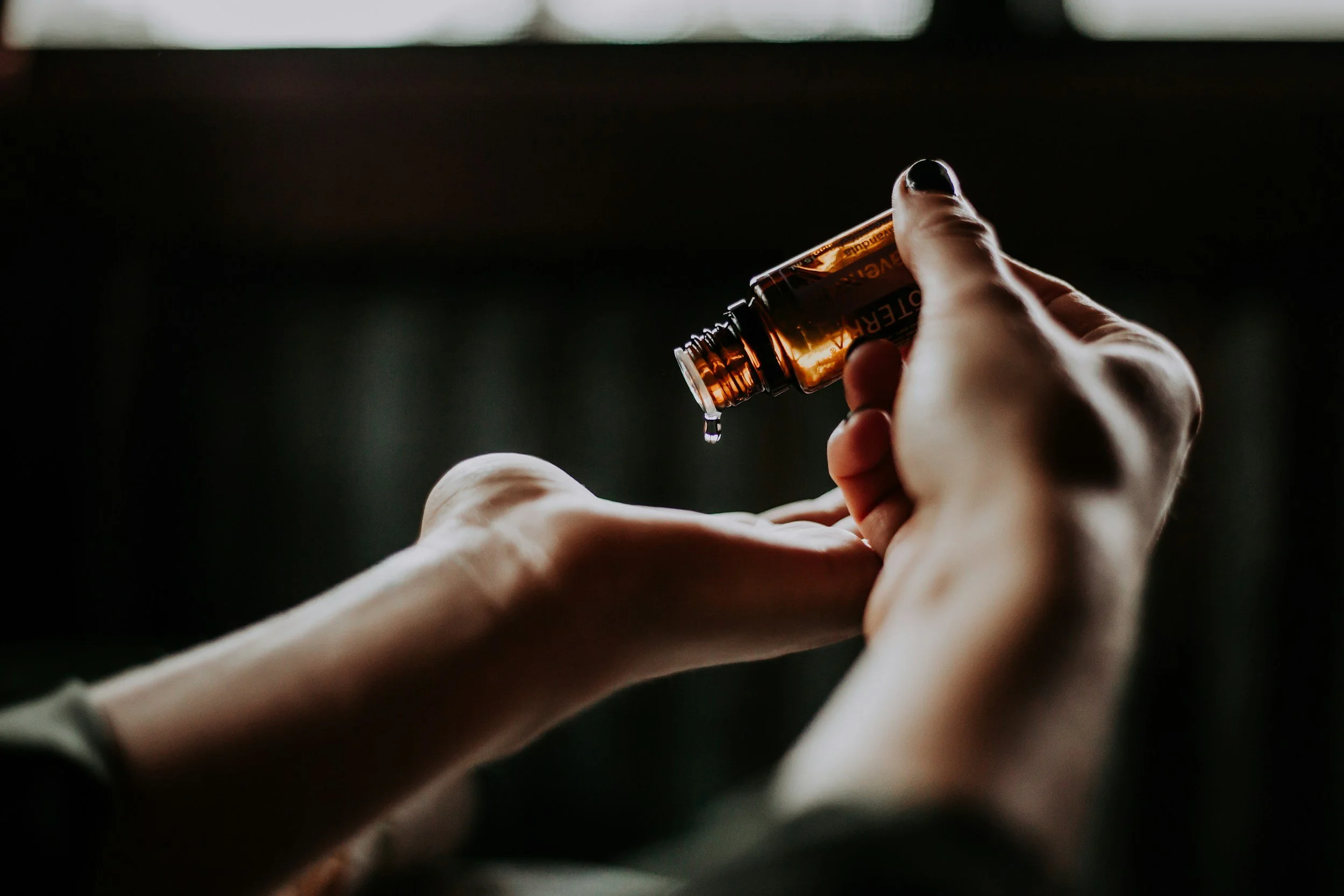
There are a variety of schools of thought when it comes to the theory and application of working with essential oils. For me, I take an intuitive yet grounded approach, one that honors the plant essence in its physical form while also respectfully acknowledging its energetic and spiritual qualities.
Over the last decade of working as an aromatherapist, this dual path of appreciation, study, and lived experience has served me well. Along the way, I’ve also received many thoughtful questions about essential oils and how I work with them. I wanted to take a moment to share some answers to a few of the most common ones that have come up over the years.
What Are Essential Oils?
Essential oils are the volatile meaning “easily evaporated” chemical constituents of plants. They are part of the plant’s natural defense and communication systems, sometimes thought of as a kind of plant “nervous system.” In many ways, they can be seen as the lifeblood of the plant, carrying within them the physical, emotional, and spiritual qualities that have made them valued allies in healing traditions for centuries.
These aromatic compounds hold the essence of the plant itself, concentrating its scent, vitality, and unique therapeutic properties into a potent form.
How Are Essential Oils Made?
Essential oils aren’t manufactured by humans; rather, they are gathered from plants through an alchemical process called distillation. Interestingly, this is the same process used to create alcoholic spirits.
During distillation, plant material is harvested and placed into a distillation vessel. Depending on the type of oil being produced, different parts of the plant may be used, including flowers, roots, stems, leaves, bark, or resins.
The plant matter is gently heated as steam builds within the distiller. As the steam moves through the plant material, it encourages the tiny oil pores within the plant to open and release their aromatic compounds. These vapors then travel through a cooling coil, where they condense back into liquid and collect in a separate vessel. The essential oil separates from the aromatic water and is then carefully gathered.
Steam distillation is the most common method used to extract essential oils. However, other methods are also used depending on the plant. Citrus oils, for example, are often obtained through cold pressing, while delicate botanicals may require natural solvent extraction to preserve their fragile aromatic compounds.
Are Essential Oils Safe?
Essential oils are safe when approached with knowledge, honor, and respect. As with most things, how you use them, how much you use, and the method of application all make a significant difference. While we certainly know that not everything found in nature is safe, the fear-mongering, misinformation, and lack of lived experience often give essential oils a bad reputation.
What really surprises me is the number of synthetic chemicals, cleaners, compounds, and products we are exposed to every day that are far riskier to our health, yet rarely questioned in the same way.
Taking a balanced, educated, and mindful approach to any substance we choose to work with is what truly allows for safe and successful long-term use.
If you have any medical conditions, allergies, are taking certain medications, or have any concerns, please reach out to a medical provider for guidance and coordinate care with your aromatherapist.
Application of Oils
There are a variety of ways to work with essential oils, each with its own unique benefits. I often utilize multiple application through-out my day.
Topical Use
I love wearing essential oils. It’s part of my everyday support and routine. Depending on the intention, need, or desire of the moment, I choose oils that feel appropriate and apply them topically to the skin.
Some schools of thought warn strongly against wearing essential oils “neat,” meaning undiluted. While it is certainly true that many oils should be applied with a carrier oil, not all oils necessarily require this. In my tradition of aromatherapy, we aim to preserve as much of the plant’s medicine as possible, and wearing oils neat can sometimes be part of that approach. That said, there are important protocols to follow.
Oils such as thyme, oregano, cinnamon, and ginger are considered “hot oils.” These oils can create a sensation of heat or irritation when applied directly to the skin. When working with hot oils, it’s best to layer them between cooler essences or dilute them with a carrier oil such as grapeseed, jojoba, or a body moisturizer. It’s also important to wash your hands thoroughly after handling hot oils and avoid touching sensitive areas of the body such as the eyes, underarms, or genitals.
It’s also worth noting that everyone’s skin is different. Even cooler oils can sometimes cause irritation. Starting with small amounts, doing a patch test, and paying attention to your body’s response are important when exploring with oils.
I also suggest avoiding applying oils immediately after a hot shower, intense exercise, or when the body is overheated. At those times the pores are more open and the skin more sensitive. Applying oils to cooler, calmer skin tends to give better results.
Some schools of aromatherapy prescribe exact numbers of drops for application, and there are many wonderful recipe books available. For me, however, applying oils topically is also an intuitive and spiritual practice. While “less is more” is a good general guideline, I might wear anywhere from three to eight drops of a particular oil. Learning to trust your instincts and listening to what your body needs is part of the practice.
Baths: Bathing with essential oils can be a wonderful way to ease sore muscles, release tension, and bring you back to yourself.
I generally recommend avoiding “hot oils” in the bath. Because essential oils are hydrophobic, meaning they do not mix well with water, the heat of the bath can sometimes drive the oil more deeply into the skin and create irritation.
Instead, stick with gentler, soothing oils such as lavender, rose, or cedarwood. A few drops added to the bath along with Epsom salts and a small amount of bath oil—such as almond oil or shea butter—creates a lovely and supportive combination.
Inhalation: Inhalation is a powerful method for utilizing the healing benefits of essential oils. One simple way is to place a few drops in the palm of your hands, rub them together, and breathe slowly and deeply. This can help open breathing passages, encourage relaxation, and promote a general sense of calm.
Some companies also provide nasal inhalers where you can place essential oils into small portable dispensers and breathe them in throughout the day as needed.
My favorite technique is using a steam bath. Boil water and pour it into a heat-proof basin. Add a few drops of essential oil, place a towel over your head, and gently breathe in the steam. This method can be especially supportive when you’re under the weather, dealing with allergies, or feeling congested.
Be mindful to avoid using “hot” oils with this method, and keep your eyes closed, as oils in evaporated form can sometimes irritate the eyes.
Diffusion: When we wear essential oils on our bodies, we essentially become living diffusers. As our body warms and we move throughout the day, the scent naturally disperses into the space around us.
However, wearing oils is not the only way to diffuse them. Many companies now sell diffuser jewelry, such as pendants or bracelets, where you can place a few drops of oil and carry the aroma with you throughout the day.
There are also many excellent cold diffusers available. Some use water combined with drops of essential oil to disperse the aroma throughout a room. My personal favorite are nebulizing diffusers, which disperse the oil neat into the air without water, preserving the full aromatic profile of the oil.
And in a pinch, I’ve even “MacGyvered” my own diffuser by placing a few drops of oil on a paper towel and attaching it to the back of a fan. Sometimes simple solutions work just fine—use what works for you.
How Do I Choose the Right Oil?
There are many wonderful resources available in books and online, including my own e-store to help you explore which oils you may want to work with. Choosing the right oils is best approached with a balance of research and intuition.
Take time to learn about the attributes, virtues, and properties of different oils across the physical, emotional, and spiritual dimensions. Considering all three allows for a more holistic approach to aromatherapy.
Once a few oils call to you, work with them consistently. Use them daily, meditate with them, wear them, and spend time experiencing their scent and effects. This is one of the best ways to develop a deeper relationship with the oils and allow them to support your own healing journey.
And remember, you don’t have to explore alone. If you’re unsure where to begin, feel free to reach out to me or another trusted aromatherapist for guidance and support.
Happy exploring.